

I have an unfair advantage on Substack.
And it has nothing to do with talent or experience.

“Content creation is for those people.“
The confident ones.
The interesting ones.
The “experts”.
This belief is exactly why most people never even start building anything.
6 months ago, I started a Substack with zero audience, credibility, and many excuses.
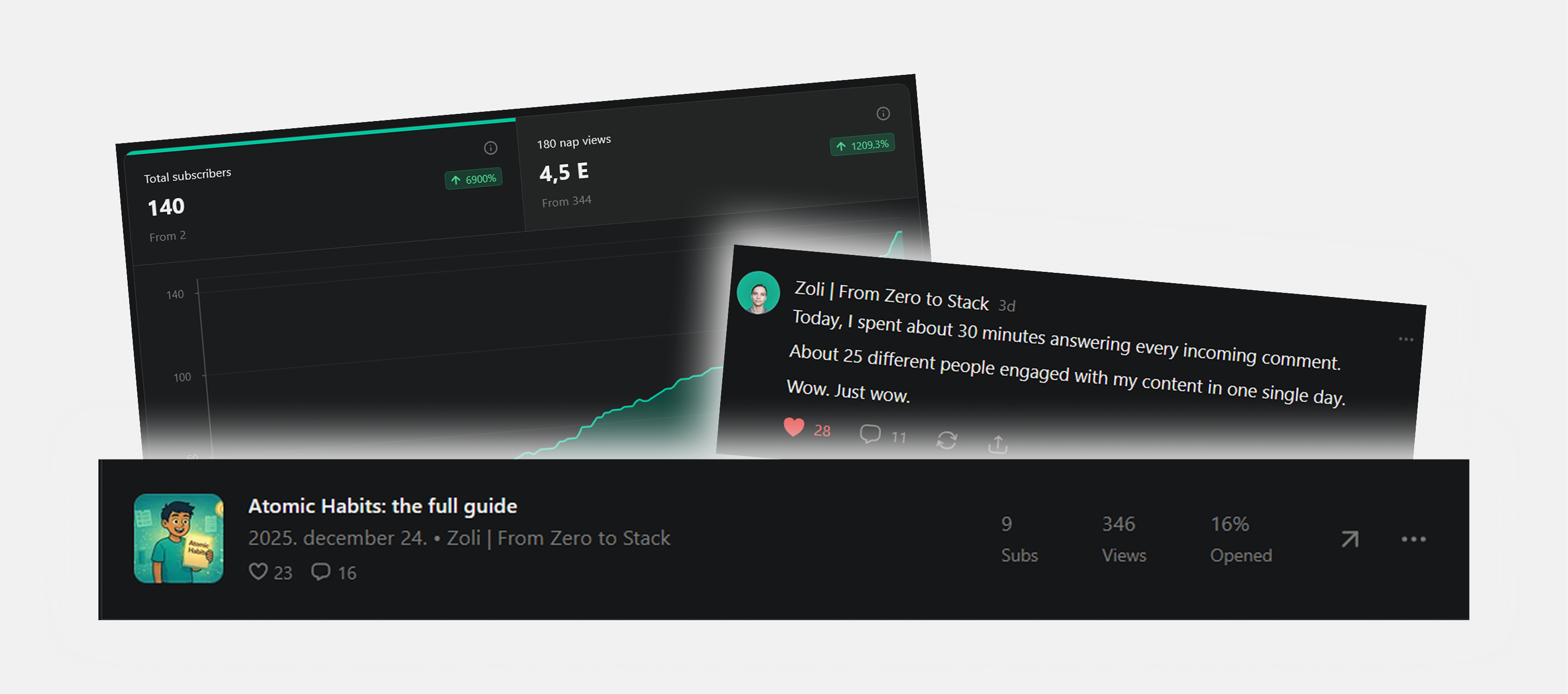
Today, more than 140 people have subscribed, and that’s not even the main point:
Content has become my biggest leverage ever.
At the beginning, I thought this was impossible.
Not because I lacked ideas, but because I thought I wasn’t yet ready to post.
Half a year into the journey, I had to realize:
Starting before you’re ready is an unfair advantage
I noticed that most people don’t avoid content creation because they’re lazy.
They avoid it because it feels like stepping onto a stage unprepared.
“What if nobody cares? What if I embarrass myself?“
Here’s the part nobody tells you:
Starting from zero makes content creation extremely safe.
When you have no audience, there’s no stage you step on.
You don’t have to meet any expectations. You don’t have to protect any reputation.
Every time you publish in this condition, two things can happen:
Nobody sees it = you practiced without consequences
Some people see it = you made progress
Put simply, you can’t really fail.
And this is exactly why content can become a valuable leverage so fast.
Even when you have no reach, content slowly:
Compounds (into skills, opportunities, and eventually, income)
Forces clarity (especially if you write about yourself)
Attracts your target audience
Helps you build credibility and connections
Once you understand this, content creation isn’t a risk anymore.
It’s a path to inevitable growth.
Why I was invisible for 2 months
I signed up on Substack in late June 2025, with one specific intention:
To document my journey as a beginner solopreneur.
I did what most new writers do: Write → Publish → Hope
This is why my first 10 posts barely reached anyone.
At first, I was okay with this, but then I realized:
There’s massive potential in writing, and I was wasting it by journaling.
In mid-September, I made some changes:
I relaunched From Zero to Stack.
I not only tightened up my branding and visually improved my publication.
I changed my approach, and this was what caused my consistent growth.
By late October, my publication had 50 subscribers.
Early January, I crossed the iconic milestone of 100 subscribers.
But how did my approach change?
My writing skills didn't improve much. I just implemented two daily actions:
1. Posting notes
A big mistake I made earlier was posting only long-form.
No matter how good or bad these were, I couldn’t reach people.
If you’re starting out, posting 3-5 notes per day is the fastest way to become visible.
About 75% of my total following is from notes; it was a true game-changer.
2. Engaging with others
Substack allows you to connect with people using several channels:
Comments, threads, DMs, and notes.
By utilizing all of these, you can reach significantly more people.
The secret is being genuine and thoughtful.
It wasn’t mindless promotion that helped me grow.
It was joining conversations and sharing my ideas, truly resonating with others.
5 things I wish I knew before starting
If I’m being honest with you, I’m still far from being an expert on Substack.
But when you write consistently for half a year, you do learn a few things:
1. Have a specific niche and a unique angle
When you post about everything, people won’t know if your content is for them.
Having a clear target audience isn’t just helpful for others finding you:
It can help you a lot in writing as well:
It’ll be easier to find good content ideas
You’ll know what tone to write in and what format to use
Having a unique angle is just as important — this is what makes you stand out.
Use your own lens when writing about a topic, and you’ll be way more memorable.
2. About the role of consistency and intensity
Writing isn’t about publishing 10 posts in a week and then being inactive for months.
It’s about showing up daily, so others start recognizing you.
I’ll be honest: I miss a few days every once in a while and still get results.
The more active you are, the faster you’ll grow — and missing one day won’t break everything. The mistake isn’t missing a day; it’s quitting afterwards.
Understand this correctly, and content creation will instantly feel lighter.
3. Long-form: once a week is perfect
If your main goal is growth, notes and engagement do the heavy lifting.
Long-form posts have a different job:
Building trust
Showing credibility
One solid post per week is more than enough to do that.
If you have the energy to write more than one post, do one of these:
Use that energy for extra engagement (this directly translates to more growth).
Pre-write posts you’ll publish later on (build a buffer for difficult periods).
4. Follow a daily routine
When it comes to consistent growth, building an everyday habit is essential.
Here’s the simple 3-4-5 system, if you’d like something concrete:
Post at least 3 notes: share reframes, observations, lessons, personal stuff
Write at least 4 DMs: to new or inactive subs, or ongoing conversations
Leave at least 5 comments: share ideas, counterpoints, extra information
This covers visibility, relationships, and credibility every single day.
5. Experiment relentlessly
You won’t know what works best for you until you test a variety of options.
My best post was by far the Atomic Habits deep dive, and I’m still figuring out why.
This is part of the process: Experiment → Find patterns → Double down
I started writing at 16, from zero.
Now, well over 250 people follow my journey.
Not because I’m great at writing: because I started before I was ready.
And that’s the real unfair advantage.
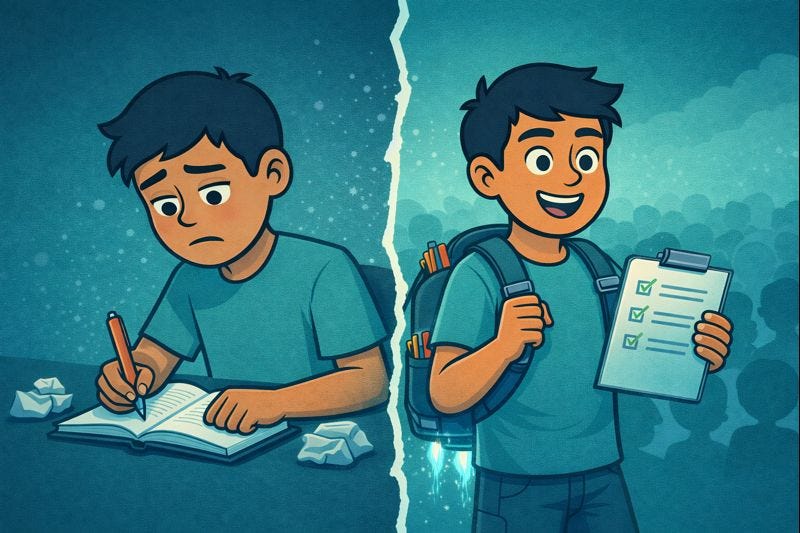
If you’re reading this and still hesitating, here’s the truth:
You don’t need perfect conditions to start. Starting is the perfect condition.
Confidence and expertise only come after you publish.
So when you’re done reading this, just start.
The best time to start was yesterday.
The second-best time is right now.
The fear is usually taking that first leap. I had procrastinated a lot, but I'm glad I started.
starting with nothing is actually freedom; no expectations, no pressure, just reps.
Most people wait to feel ready. You got ready by showing up.
That’s the advantage.